
Antique pricing is the process of estimating what an older object is worth in a particular market, while its condition, provenance, rarity, and buyer demand help determine whether that estimate holds up over time. There is no universal price list: the same type of object can sell for very different amounts depending on authenticity, repairs, completeness, and where and how it is offered. Auction results and market reports show that collectibles can attract strong prices, but those outcomes do not make antiques reliable investments. Buyers can make better decisions by distinguishing appraisals from sale prices, assessing condition carefully, and accounting for selling costs, insurance, and market risk.
Antique pricing reflects market value, not age alone
An antique is commonly understood in the United States as an object at least 100 years old, a definition used for customs classification under U.S. law. That age threshold does not guarantee high value. The Smithsonian Institution’s National Museum of American History emphasizes the importance of an object’s historical context and material evidence; in the commercial market, value also depends on what informed buyers are willing to pay for a comparable item at a particular time.
A useful distinction is between an item’s asking price, its realized sale price, and an appraised value. An asking price is a seller’s offer, not proof that a buyer will pay it. A realized price is the amount recorded in a completed transaction, though auction fees and other charges may affect the buyer’s total cost and seller’s net proceeds. An appraisal is an opinion of value prepared for a stated purpose and date. These figures can differ substantially, so comparisons should use similar objects sold through similar channels.
Market data reinforces the need for caution. The Bureau of Labor Statistics’ Consumer Price Index measures changes in prices paid by urban consumers for a broad basket of goods and services; it does not track antique values. Likewise, auction-house headlines describe selected sales, often exceptional examples, rather than the performance of the wider antiques market. For prospective buyers, this means that a record sale is evidence of demand for one object—not a dependable forecast for another.
Condition and provenance shape antique value
Condition describes an object’s present physical state in relation to its age, materials, and expected use. Provenance is its documented history of ownership and, where available, its creation or use. The Appraisers Association of America and the International Society of Appraisers both stress that appraisal work requires examining relevant characteristics and the intended purpose of the valuation. In practice, condition and provenance are considered alongside authenticity, rarity, maker, cultural significance, and current demand.
Condition: originality, damage, and restoration
Condition assessment records observable features such as cracks, losses, corrosion, fading, repairs, replaced parts, and alterations. “Original condition” does not always mean untouched: appropriate conservation can stabilize an object, while poorly documented or invasive restoration can obscure evidence or reduce desirability. The effect is category-specific. A repaired ceramic vessel, a refinished piece of furniture, and a restored painting raise different technical and market questions.
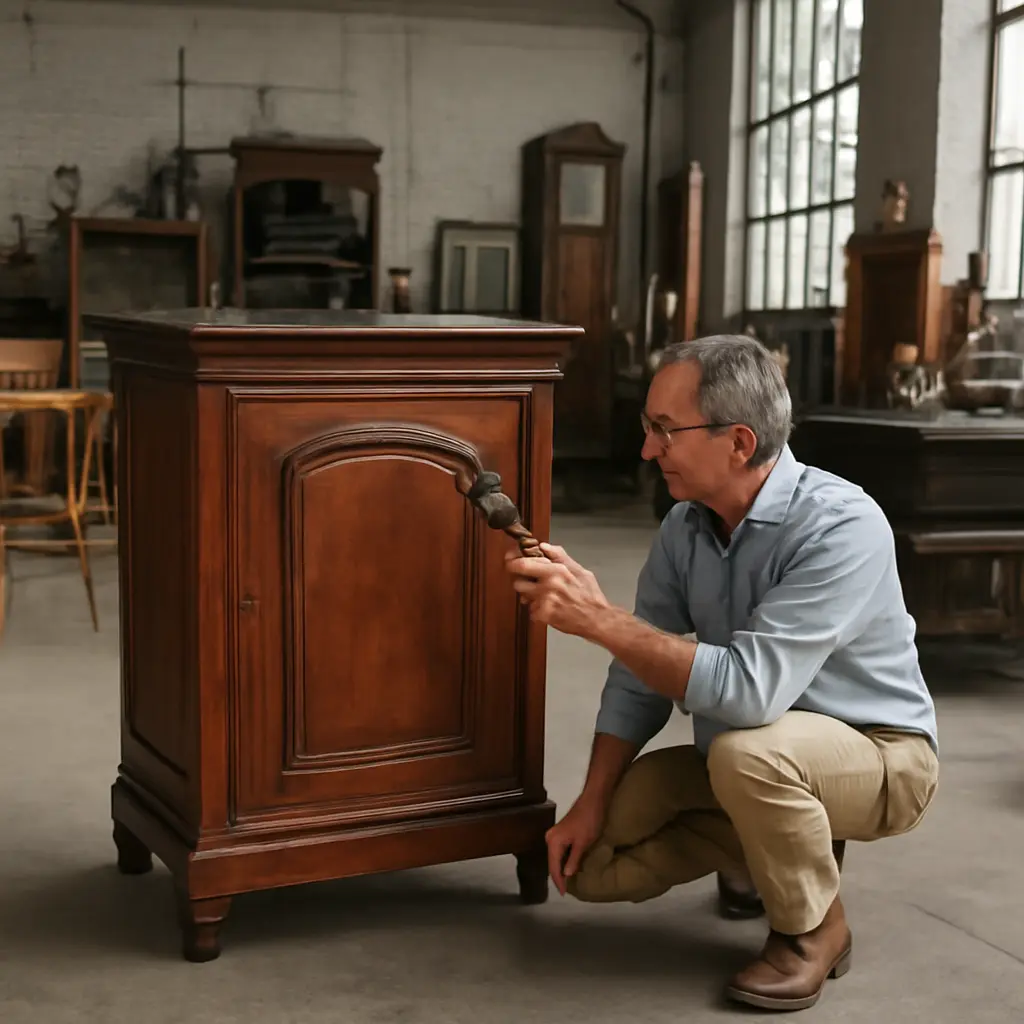
For example, a furniture buyer may compare the finish, hardware, joinery, and replaced components with examples of the same period and maker. A specialist in ceramics may examine chips, hairline cracks, overpainting, and whether a mark is consistent with the claimed manufacture. Photographs under ordinary and raking light, written disclosures, and an independent specialist’s examination can help document condition. A seller’s description should identify known repairs rather than treating “excellent for its age” as a substitute for a detailed report.
Provenance and authenticity
Provenance is the traceable chain of ownership or custody associated with an object. Receipts, inventories, exhibition records, family documents, maker’s marks, and archival references may support a history, but each piece of evidence needs evaluation. A convincing story without corroboration is not equivalent to documented provenance, and a label or signature alone does not establish authenticity.
Provenance can influence value by reducing uncertainty, linking an object to a notable owner or event, or supporting attribution to a maker. It can also raise legal and ethical questions. The UNESCO 1970 Convention addresses measures to prohibit and prevent the illicit import, export, and transfer of ownership of cultural property; it is not a universal certificate of title, but it underscores why buyers should investigate an object’s origin and applicable laws, especially for archaeological material and culturally significant objects.
Rarity, maker, and comparable sales
Rarity means more than “old” or “hard to find.” It should be assessed against the number of comparable examples, the object’s completeness, and the depth of buyer demand. A scarce item may still have little commercial value if few people want it; a more common object by a sought-after maker can sell well when condition and design appeal are strong.
Comparable sales are completed transactions involving sufficiently similar objects. A useful comparison considers maker, date, materials, dimensions, condition, provenance, sale date, location, and sales channel. Auction databases can provide evidence, but a single high result should not be treated as a typical price. A chart comparing three to five genuinely similar sales—showing sale date, hammer price or reported price, condition, and fees where known—can make differences visible and prevent misleading comparisons.
Antique appraisal and pricing depend on purpose and method
An appraisal is a reasoned opinion of value for a defined purpose, such as insurance, estate settlement, charitable contribution, or a potential sale. The Appraisal Foundation’s Uniform Standards of Professional Appraisal Practice (USPAP) require appraisers subject to those standards to identify the assignment’s intended use and intended users, among other scope elements. Because different purposes call for different value definitions, one appraisal figure should not automatically be reused for another situation.
Fair market, replacement, and liquidation values
Fair market value generally concerns a hypothetical transaction between informed, willing parties under specified conditions. Replacement value estimates the cost of replacing an item with one of comparable kind and quality, often for insurance. Liquidation value may reflect a constrained sale or a shortened marketing period. These concepts answer different questions, so an insurance schedule may reasonably be higher than the amount a seller could expect to receive in an ordinary sale.
Before commissioning an appraisal, the owner should explain its purpose, ask what definition of value will be used, and confirm whether the fee is based on time or another arrangement. Professional appraisal organizations advise clients to consider qualifications, relevant specialty experience, independence, and a written scope of work. For valuable or disputed items, a qualified specialist’s examination is usually more reliable than an informal estimate from a person who may also be seeking to buy the object.
Auction, dealer, and private-sale prices
The same object can produce different outcomes at auction, through a dealer, or in a private sale. Auction results depend on the number and motivation of bidders, catalog quality, timing, and fees. Dealers typically incur costs for expertise, inventory, overhead, and the time required to find a buyer; their retail price may therefore exceed a likely immediate resale price. Private sales can avoid some intermediary costs but require the seller to handle research, marketing, screening, and transaction risk.
When reviewing an auction result, distinguish the hammer price—the winning bid before applicable buyer’s premium and taxes—from the buyer’s total cost. Likewise, a seller should ask about commission, insurance, transport, photography, storage, and reserves before consigning. Comparing net proceeds rather than headline prices gives a more realistic picture of what the owner may receive.
Antiques can retain cultural value without being dependable investments
Investment value is the possibility that an asset’s resale proceeds, after costs and inflation, will compensate an owner for the money and risks involved. Antiques may appreciate, but they do not provide guaranteed returns, and many are difficult to sell quickly at a predictable price. Unlike publicly traded securities, they have no continuous, transparent market quotation. Price evidence is intermittent and concentrated in objects that actually reach documented sales.
Costs, liquidity, and market risk
The economics of ownership include more than the purchase price. Insurance, secure storage, conservation, appraisal fees, transport, auction commissions, dealer margins, and taxes can reduce or erase a gain. The U.S. Internal Revenue Service’s rules also distinguish categories of property and transactions for tax purposes; owners should consult current guidance or a qualified tax professional rather than assume that an antique is treated like a conventional investment account.
Liquidity risk matters because a seller may need to wait for the right collector or accept a discount for a faster sale. Demand can shift with fashion, demographics, interior-design trends, and changing tastes. A category that is fashionable today may become less sought after, while objects with enduring historical, artistic, or craft significance may continue to attract specialist interest. Neither outcome can be assumed for an individual piece.
A practical example: evaluating a period cabinet
Consider a cabinet described as an eighteenth-century example by a named maker. The asking price alone cannot confirm its age or investment potential. A careful buyer would compare construction details, materials, hardware, finish, and documented repairs with authenticated examples; inspect the provenance; and review several recent sales of cabinets with similar attribution, condition, and dimensions. A specialist may also determine whether replacement components or later alterations affect the description.
The buyer would then calculate the total cost, including premiums, tax, shipping, insurance, and any conservation work. If the purchase is being considered as an investment, the relevant question is not merely whether a comparable cabinet once sold for more, but whether a plausible future sale price could exceed all costs after an uncertain holding period. This process turns an appealing story into a testable decision without pretending to predict the market.
Buying and preserving responsibly
- Request a written condition report and clear photographs, and ask about repairs, alterations, and missing parts.
- Verify attribution and provenance with independent records or an appropriately qualified specialist.
- Compare multiple realized sales of closely related objects, accounting for date, condition, venue, and fees.
- Clarify whether a quoted figure is an asking price, appraisal value, hammer price, or total buyer cost.
- Budget for conservation, storage, insurance, transaction costs, and the possibility of a slow resale.
- Buy for historical, aesthetic, or personal value as well as any potential financial return.
Conclusion: informed appraisal protects both value and history
Antique pricing is shaped by evidence and context, not age alone. Condition, originality, provenance, authenticity, rarity, comparable sales, and the sale channel all affect what a buyer may pay. Appraisals are useful only when their purpose and value definition are clear, while headline auction results should not be mistaken for guaranteed resale prices. Long-term ownership also brings costs, liquidity limits, and changing demand, making antiques uncertain financial investments even when they are culturally or personally meaningful.
Before purchasing, selling, insuring, or inheriting an antique, document its condition, seek independent expertise where appropriate, and compare net outcomes rather than advertised prices. Consult professional appraisal organizations, museum collection resources, auction records, and relevant legal or tax guidance for further research. Careful evaluation helps owners protect both an object’s potential market value and its historical significance.
Sources: United States Code, 19 U.S.C. § 1629, “Antiques”; Smithsonian Institution, National Museum of American History, Collections and Research; U.S. Bureau of Labor Statistics, Consumer Price Index; Appraisers Association of America, Appraisal Services and Professional Standards; International Society of Appraisers, Appraisal Information; The Appraisal Foundation, Uniform Standards of Professional Appraisal Practice (USPAP); UNESCO, Convention on the Means of Prohibiting and Preventing the Illicit Import, Export and Transfer of Ownership of Cultural Property, 1970; U.S. Internal Revenue Service, Publication 544, Sales and Other Dispositions of Assets