
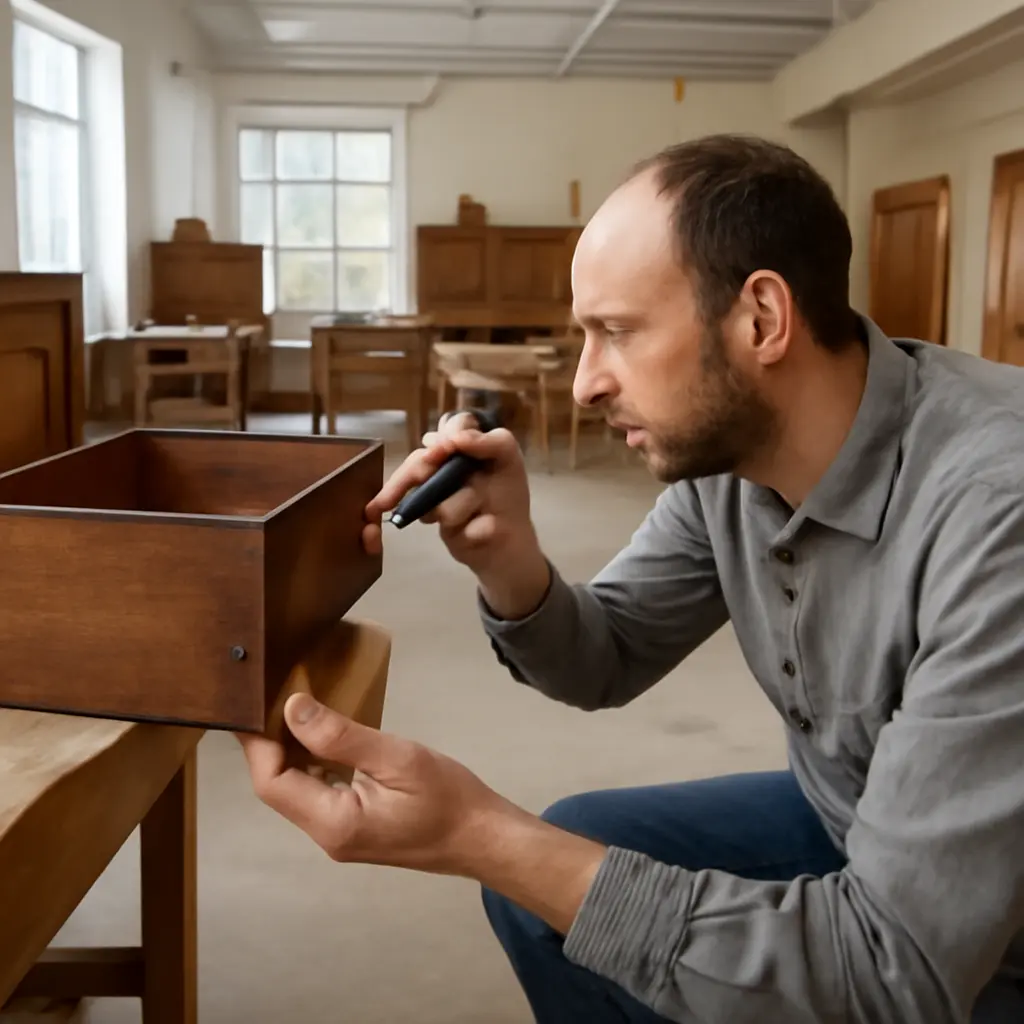
A joint is the place where two pieces of wood meet, and its construction can offer useful clues about an antique’s age. Nail types, tool marks, wood movement, and the overall design of a joint can help distinguish hand-built furniture from machine-made work—but none is a reliable date stamp on its own. The strongest assessment combines several clues with the object’s style, materials, finish, and documented history. Understanding that evidence can help owners and buyers avoid common dating mistakes and decide when a professional appraisal is warranted.
Joints and Nails Reveal an Antique’s Construction History
Furniture construction evidence is the physical record left by the methods and materials used to assemble an object. The National Park Service’s preservation guidance treats workmanship, materials, and physical evidence as important parts of assessing historic objects and buildings; in furniture, joints and fasteners are among the places where that evidence is visible. They can indicate whether a piece was made by hand, produced with machinery, repaired later, or assembled using a mix of methods.
Dating matters because a plausible-looking antique may include later repairs, reused parts, or reproduction components. Yet no single feature proves a date: hand-cut dovetails continued after machine-cut versions appeared, and old furniture was often repaired with newer nails. Read the evidence as a group, and treat any date as a reasoned estimate rather than a certainty.
Construction Evidence Defines the Age Clues in Joints and Nails
Construction evidence means the observable traces of how an object was made and altered. The Smithsonian’s conservation work emphasizes examining an object’s materials, manufacture, condition, and history rather than relying on appearance alone. For furniture, useful evidence includes joint geometry, saw and chisel marks, fastener shape, wear patterns, and whether components appear consistent with one another.
These clues are related but distinct. Joinery records how wood components were fitted together; nails and screws record how they were fastened; tool marks and wear help test whether those features belong to the same period. A contextual bridge between them is essential: an early-looking joint paired with modern fasteners might reflect a repair, a reproduction, or a component reused from older furniture.
Hand-cut and machine-cut dovetails
A dovetail joint uses interlocking, fan-shaped projections and sockets to resist pulling apart. Hand-cut dovetails often vary slightly in spacing and angle, and the pins may be irregular; machine-cut examples are commonly more uniform. The difference is a clue to manufacturing technique, not a precise calendar. Machine production expanded during the 19th century, but handwork persisted, and later craftspeople could deliberately imitate older irregularities.
Inspect the whole drawer, not just one corner. Look for consistent tool marks, the way the drawer bottom is fitted, and whether the joint’s wear matches the drawer’s use. A single hand-cut-looking joint cannot establish that a chest or desk is genuinely old.
Mortise-and-tenon and other frame joints
A mortise-and-tenon joint joins a projecting tenon on one piece of wood to a matching cavity, or mortise, in another. Variations include wedged, pinned, and blind tenons. These joints appear across many centuries and furniture traditions, so their presence alone has little dating value. Their proportions, workmanship, tool traces, and relationship to the object’s style provide more useful context.
Other joints—such as lap joints, dovetails, and tongue-and-groove boards—also span long periods. A careful examination asks whether the joint is appropriate for the object’s function and whether its construction is consistent with the rest of the piece.
Wood movement and joint wear
Wood expands and contracts mainly across the grain as its moisture content changes. Traditional furniture makers accounted for this movement with floating panels, slots, and joints that allow components to shift without splitting. Cracks, gaps, or distortion can therefore reveal how a piece was built and stored, but they do not independently establish age: climate, repairs, and wood species all affect the same symptoms.
Wear is similarly contextual. Polished edges, softened corners, and grime in protected recesses may be consistent with long use, but wear can be artificially produced or transferred from an older component. Compare exposed and sheltered surfaces, and check whether wear aligns with how the furniture would actually have been handled.
Nail Types Add a Second Line of Evidence
Nails are metal fasteners whose manufacturing marks can help place a component within a broad technological period. The Historic American Buildings Survey and related National Park Service documentation describe how fasteners and other construction details are used in historic-building analysis. Furniture requires the same caution: manufacturing transitions were gradual, regional, and affected by supply, cost, and repair practices.
Wrought nails
Wrought nails were forged by hand, often leaving irregular shanks and heads. They are associated with preindustrial construction, but continued use and later repairs complicate any simple date. A handmade nail in an old-looking chair may belong to its original assembly—or may have been added during a later repair.
Cut nails
Cut nails are made by shearing nail blanks from iron or steel plate, typically producing a tapered, somewhat rectangular shank. Mechanized cutting spread in the late 18th and 19th centuries, with adoption varying by place and application. Their presence can support a broad period assessment, but it cannot by itself distinguish an original fastener from a replacement.
Wire nails
Wire nails are formed from drawn wire and usually have round shanks. Their manufacture became widespread in the later 19th century, making them a useful clue when found in an apparently original, concealed location. A wire nail in a much older piece may instead document a repair. Examine corrosion, nail-hole shape, surrounding wood, and whether the fastener appears to have been disturbed.
Screws and later hardware
Screw slots, heads, threads, hinges, and drawer pulls can provide additional evidence. Hand-finished slots may be less uniform than machine-made examples, while modern replacement hardware can differ visibly from original fittings. Hardware is especially easy to replace, so it should be treated as supporting evidence and checked against the wood beneath it for extra holes, altered outlines, or mismatched patina.
A Combined Inspection Is More Reliable Than One Clue
A practical assessment compares independent clues rather than assigning a date from one nail or joint. The American Institute for Conservation advises that treatment and examination decisions account for an object’s materials, condition, and significance; for a valuable or fragile piece, a qualified furniture conservator or appraiser can document evidence without causing damage.
- Photograph the object from all sides, including drawer interiors, undersides, and the backs of doors.
- Record joint types, fastener shapes, tool marks, wood species where identifiable, and signs of repair.
- Compare the evidence with the piece’s style, regional tradition, and known manufacturing history.
- Separate likely original construction from later alterations; do not remove fasteners or scrape finishes to investigate.
- Seek a specialist’s opinion when the object is valuable, structurally unstable, or being considered for purchase or conservation.
For example, a drawer with uneven dovetails and a cut nail is not automatically an 18th-century original. If the drawer sides, bottom, hardware, and wear tell a consistent story, the evidence may support an older date; if the nail holes are enlarged or the hardware leaves newer marks, later repair is a plausible explanation. A chart could usefully compare wrought, cut, and wire nails by shank shape and broad manufacturing period, while clearly noting that overlap and reuse prevent exact dating.
Conclusion: Treat Joints and Nails as Evidence, Not Proof
Joints reveal how furniture was assembled, while nails and other hardware offer clues about fastening technology. Tool marks, wood movement, wear, and repair history help determine whether those clues fit together. Because hand methods persisted and old pieces were frequently altered, no joint or nail can establish an antique’s age on its own.
A careful, non-invasive inspection—and, when needed, advice from a qualified specialist—provides a more defensible assessment than a quick visual guess. For further reading, consult museum conservation resources and historic-preservation guidance, and document the object before attempting any cleaning or repair.
Sources: National Park Service, Museum Handbook, Part I: Museum Collections, https://www.nps.gov/museum/publications/MHI/ MHI.pdf; Smithsonian Museum Conservation Institute, Caring for Your Treasures, https://www.si.edu/mci/english/learn_more/taking_care/index.html; National Park Service, Historic American Buildings Survey (HABS), https://www.nps.gov/subjects/heritagepreservation/historic-american-buildings-survey.htm; American Institute for Conservation, Find a Professional, https://www.culturalheritage.org/about-conservation/find-a-conservator