
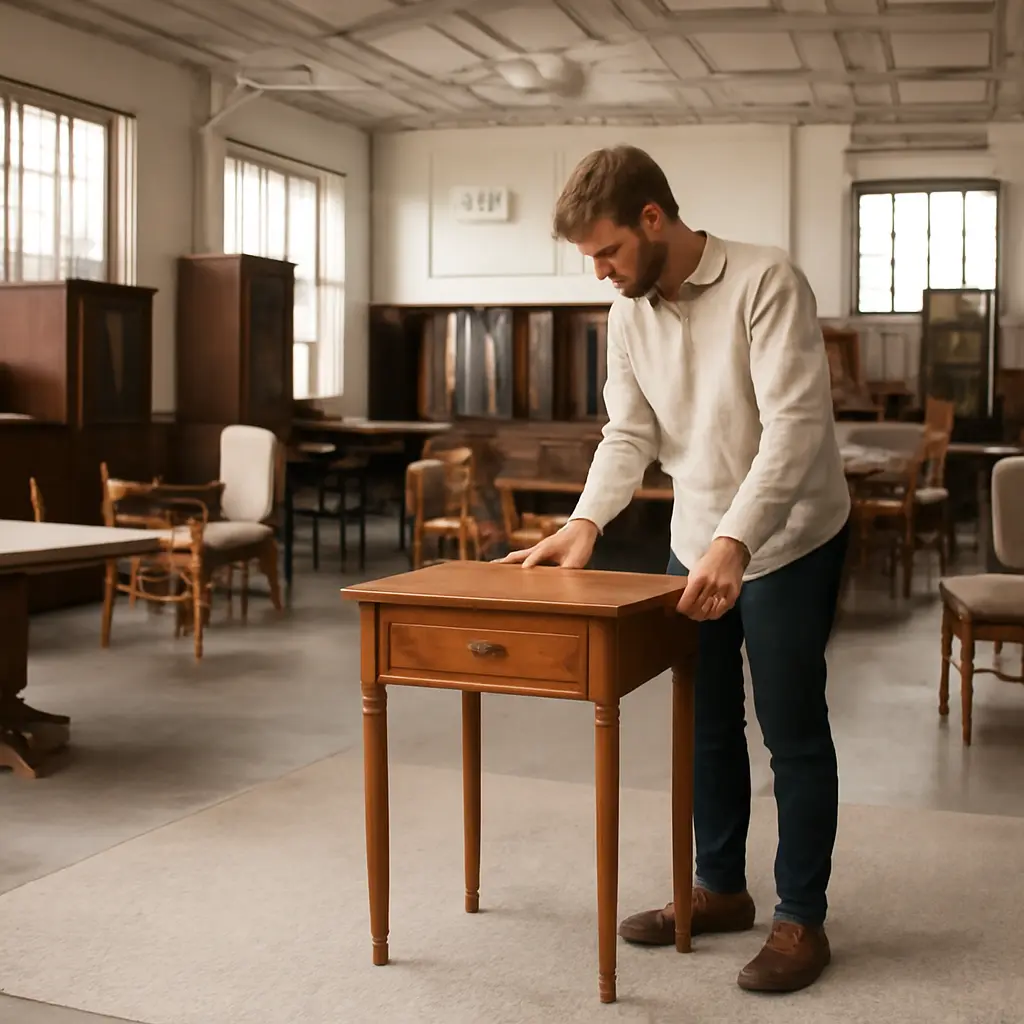
Antique hunting can make contemporary rooms feel more distinctive, useful, and connected to history than furnishing them entirely with mass-produced pieces. An antique is generally an object at least 100 years old, while vintage usually describes items from a more recent period; either can bring craftsmanship, patina, and visual contrast to a modern interior. The case for hunting is not simply aesthetic: the U.S. Environmental Protection Agency reports that 12.1 million tons of furniture and furnishings entered the U.S. municipal waste stream in 2018, with 80.1% landfilled. Choosing a sound, pre-owned piece can keep usable furniture in circulation, although condition, transport, repairs, and the alternative purchase all matter. This guide explains what antiques contribute, how to source and assess them, how to combine old and new, and where sustainability claims need qualification.
Antique hunting gives contemporary spaces character and practical value
Antique hunting is the intentional search for older furnishings and decorative objects that can serve a present-day home. It differs from buying a coordinated set because the shopper evaluates each piece for its history, construction, condition, and fit. The payoff is a room that feels collected rather than copied: a modern sofa may gain warmth from a carved wooden table, while a spare interior can be softened by an old mirror or a handwoven rug.
The U.S. Environmental Protection Agency’s 2018 figures offer a useful measure of the broader furniture-waste problem: of 12.1 million tons of furniture and furnishings generated in the municipal solid-waste stream, 9.7 million tons were landfilled. Those numbers describe the whole category, not the impact of any one antique purchase. Still, they show why extending the useful life of furniture is relevant. Buying secondhand is most persuasive when it replaces a new purchase, the item is durable enough to use, and it does not require disproportionate restoration or shipping.
Antique furniture’s defining attributes suit contemporary interiors
The Smithsonian Institution’s National Museum of American History describes antiques as objects valued for qualities such as age, rarity, workmanship, and historical significance; in common U.S. usage, an antique is often defined as at least 100 years old. The age threshold is a classification convention, not a guarantee of quality or value. A well-made older piece may offer repairable joinery, solid materials, and distinctive details, but its actual usefulness depends on construction and condition.
For contemporary rooms, the most relevant attributes are contrast, tactile variation, scale, and function. An older object can interrupt the uniformity of new furniture without making a space feel like a period room. Antique, vintage, and simply secondhand finds all belong in the broader hunt, but they are not interchangeable terms: age, provenance, and market value should be checked rather than assumed.
Craftsmanship and materials
Craftsmanship describes how an object is built, including its materials, joinery, finish, and repairability. Older furniture may feature solid wood, dovetail joints, hand-cut details, or replaceable hardware, but age alone proves none of these. Inspect the underside, drawer construction, back panels, legs, and areas where joints meet. Veneer, machine-made components, and later repairs can also be perfectly legitimate; the key is to understand what you are buying and whether it will withstand daily use.
Patina, wear, and visual contrast
Patina is the surface character that develops through age and use, including changes in color, sheen, and texture. It can make an old table or brass lamp feel distinctive beside clean-lined contemporary pieces. Patina should not be confused with damage: loose joints, active woodworm, unstable finishes, strong odors, and water damage may require costly attention. A useful rule is to distinguish attractive, stable wear from defects that compromise safety or function.
Antique, vintage, and secondhand categories
Antique commonly refers to an object at least 100 years old; vintage generally refers to an earlier period that is not necessarily that old; secondhand simply means previously owned. These labels can be used loosely in retail listings, so ask for dates, maker marks, materials, and provenance where relevant. A mid-century chair may be vintage rather than antique, yet still work beautifully in a contemporary room. The best choice is determined by design, condition, and use—not the label alone.
Antique hunting supports more individual and adaptable room design
Once the qualities of older objects are clear, the next question is how to use them without making a room feel crowded or historically themed. Designers often create balance by pairing one or two distinctive older pieces with contemporary forms, neutral walls, and practical lighting. This approach lets the antique act as a focal point while keeping the room comfortable for present-day routines.
Use one statement piece as an anchor
A statement piece is an object that draws attention through scale, form, material, or history. A carved cabinet, an old dining table, or a large framed mirror can anchor a room without requiring every item to be antique. Before buying, measure the room, doorways, stairwells, and intended placement. A piece that is visually striking but blocks circulation or cannot enter the home is not a successful find.
Mix periods through color, shape, and repetition
Mixing periods means combining furniture from different eras around a shared visual thread. Repeat a color, material, or silhouette to connect old and new—for example, black metal details can link a modern floor lamp to an antique side table, while warm wood tones can relate a vintage chair to contemporary flooring. Keep the composition selective: too many unrelated focal points can make a room feel accidental rather than collected.
Prioritize useful objects over decorative clutter
Functional antiques earn their place by doing a job as well as adding character. A sturdy desk, storage chest, dining table, or mirror can be easier to integrate than a fragile object with no clear role. Check seat height, drawer movement, stability, and maintenance needs. For upholstered pieces, inspect the frame and ask about the condition and age of the fabric and padding; reupholstery can transform a find, but should be included in the total cost.
Antique sourcing requires evidence, inspection, and a realistic budget
A successful hunt is less about discovering a famous maker than finding a sound object that fits a home and budget. Useful sources include estate sales, auction houses, specialist dealers, charity shops, architectural salvage yards, and online marketplaces. Each offers different levels of documentation, inspection time, and buyer protection. The U.S. Federal Trade Commission advises consumers to understand a seller’s policies and check claims before purchasing online; apply the same caution to descriptions of age, restoration, and authenticity.
Check structure and condition before purchase
Condition assessment means examining an object for stability, damage, repairs, pests, and signs that affect safe use. Open drawers, test doors, gently check for wobble, and look for cracks, lifting veneer, rust, mold, and missing hardware. Photograph marks or damage and ask whether repairs were made. For valuable or technically complex pieces, seek an independent specialist rather than relying only on a seller’s description.
Verify age, maker, and provenance claims
Provenance is the documented history of an object’s ownership or origin. It can support a claim about where or when an item was made, but a story without documentation is not proof. Look for labels, stamps, construction details, and comparable examples, and distinguish an attributed maker from a confirmed one. If authenticity substantially affects the price, consult an appraiser or specialist and request written terms for any guarantee.
Calculate the full cost, not just the asking price
The true purchase cost includes transport, cleaning, repairs, refinishing, reupholstery, and any required professional assessment. A low-priced piece can become expensive if it needs structural work, while an apparently costly object may be better value if it is ready to use and built to last. Set a maximum budget before bidding, confirm delivery dimensions and fees, and avoid treating a possible resale profit as guaranteed.
Secondhand furniture can reduce waste, but sustainability depends on the choice
Reuse can extend the life of a product and delay disposal, which makes secondhand furniture a practical part of waste prevention. The U.S. Environmental Protection Agency’s figures show the scale of furniture entering the municipal waste stream, but they do not calculate the emissions or environmental benefit of buying a particular antique. A responsible comparison considers what the purchase replaces, how far it travels, what restoration materials it requires, and how long it is likely to remain in service.
Prefer durable, repairable pieces
Durability is the ability of a piece to remain useful through regular use and maintenance. Solid construction and replaceable components can make furniture easier to repair, but buyers should inspect rather than infer quality from age. A repairable chair with a stable frame may be a better long-term choice than a fragile decorative object that cannot safely serve its intended purpose.
Consider transport, restoration, and indoor safety
The environmental and practical balance changes when a find requires long-distance shipping, extensive refinishing, or replacement parts. For a local purchase, ask how the item will be moved and whether it can be disassembled. Clean used items appropriately, and be cautious with peeling paint or unknown coatings, especially in homes with young children. The U.S. Consumer Product Safety Commission advises consumers to take care around lead-based paint hazards in older housing; when an antique has a suspect painted finish, avoid sanding or scraping it without appropriate professional guidance and testing.
Keep the lifecycle claim proportionate
A lifecycle comparison looks beyond the purchase moment to materials, manufacture, transport, use, repair, and disposal. Reusing a locally sourced, serviceable object is generally a more credible waste-reduction choice than buying a newly manufactured equivalent, particularly when it replaces that purchase. But no universal savings figure applies to every antique; condition, logistics, and the buyer’s alternative determine the result. Choose for longevity and actual use rather than assuming that every old object is automatically sustainable.
A practical antique-hunting method turns finds into a coherent home
The most effective approach combines a design plan with disciplined inspection. Before shopping, identify what the room needs, take measurements, and save reference images of materials and shapes that suit the space. At the point of purchase, check condition and total cost; after buying, allow the piece to settle into the room before adding more objects. This keeps the hunt focused on useful, compatible pieces instead of impulse purchases.
- Measure the intended location, access routes, and nearby furniture.
- Set a budget that includes delivery, cleaning, and likely repairs.
- Inspect stability, surfaces, joints, drawers, hardware, and odors.
- Ask for evidence behind claims about age, maker, and restoration.
- Choose a clear role for the piece and connect it to the room through color, material, or shape.
- Use the item regularly and maintain it so its useful life continues.
For example, a contemporary living room with a simple sofa and low-profile shelving could use a locally sourced vintage side table as a contrasting accent. The decision should depend on whether the table is stable, the proportions work, and its finish is safe and serviceable—not on a claim that it is “rare.” This small-scale approach captures the design benefit while limiting cost and clutter.
Conclusion: antique hunting makes contemporary spaces more personal and considered
Antique hunting offers contemporary homes craftsmanship, tactile contrast, and individuality, while giving serviceable furniture another chance to be used. The strongest purchases are selected for fit and function, checked for condition and credible history, and assessed with transport and repair costs in mind. Reuse can help keep furniture out of the waste stream, but its benefits depend on the alternative purchase and the item’s full practical life.
Start with one well-chosen piece: measure the space, inspect carefully, ask questions, and buy only what you expect to use. For further guidance, consult museum collection resources on material history, consumer-protection advice on online purchases, and local specialists for restoration or appraisal. A considered mix of old and new can make a room feel both current and unmistakably its own.
Sources: U.S. Environmental Protection Agency, National Overview: Facts and Figures on Materials, Wastes and Recycling, https://www.epa.gov/facts-and-figures-about-materials-waste-and-recycling/national-overview-facts-and-figures-materials; Smithsonian Institution, National Museum of American History, https://americanhistory.si.edu/; Federal Trade Commission, Online Shopping, https://consumer.ftc.gov/articles/online-shopping; U.S. Consumer Product Safety Commission, Protect Your Family from Lead in Your Home, https://www.cpsc.gov/safety-education/safety-guides/lead/lead-home