
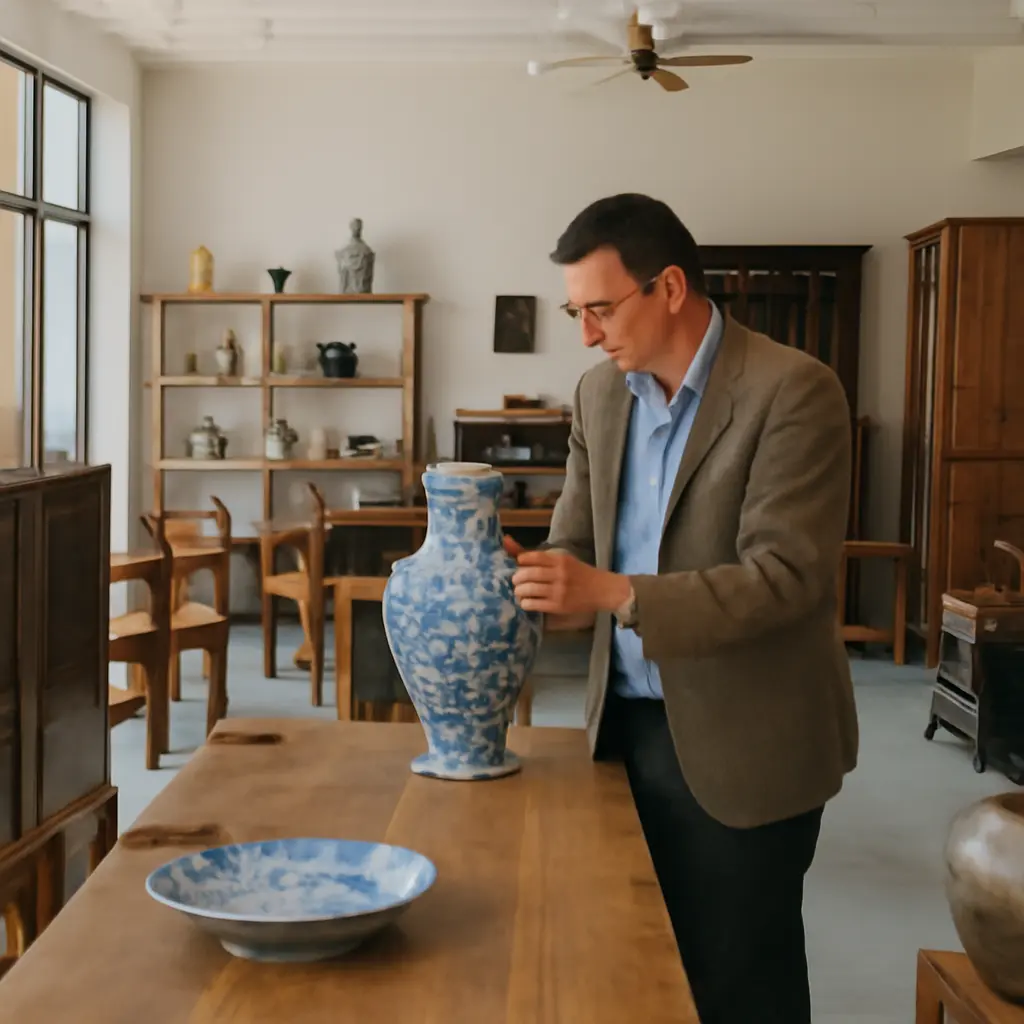
Asian antique reproductions are newly made objects designed to resemble older Asian furniture, ceramics, metalwork, paintings, and decorative arts. Some are clearly labeled and collectible in their own right; others are deliberately aged or described in ways that can mislead buyers about their date, origin, or materials. To assess a piece, look beyond its “antique” appearance: compare construction and wear with documented examples, inspect labels and repairs, check provenance, and seek an independent specialist’s opinion for valuable purchases. The distinction matters in a large global art market: the UNESCO Institute for Statistics reported that global trade in cultural goods reached about US$57.7 billion in 2020, underscoring the scale—and the complexity—of buying and selling objects across borders.
Reproductions and Asian antiques: what the terms mean
An antique is generally understood in the United States as an object at least 100 years old for customs purposes, although ordinary retail and collecting usage can be less consistent. “Reproduction” describes a later object made to imitate an earlier design or technique. The Smithsonian’s Museum Conservation Institute emphasizes that an object’s materials, manufacture, history, and condition all matter when assessing it; appearance alone cannot establish age or authenticity.
Asian decorative arts span many regions, periods, and traditions, including Chinese, Japanese, Korean, South Asian, and Southeast Asian works. A reproduction might copy a particular historical object, borrow a period style, or combine older motifs with modern production. “Antique-style,” “in the manner of,” and “after” can signal that an object is modeled on earlier work, but descriptions are not standardized across all sellers and markets. Ask what the wording means for the specific item.
Reproduction, revival, and later copy
A reproduction is usually made to recreate the look of an earlier work. A revival object uses historical forms or motifs without necessarily copying one particular piece. A later copy may be produced as a study, a workshop exercise, or a commercial imitation. These categories can overlap, and none by itself proves deceptive intent. The key questions are when and where the item was made, what it is made from, and whether the seller’s description makes those facts clear.
Why “Asian antique” needs greater specificity
“Asian” is a broad geographic label, not a precise attribution. A credible description should identify the relevant country or region, approximate date, materials, and basis for the attribution where possible. Terms such as “Chinese,” “Japanese,” or “Southeast Asian” should not be treated as interchangeable: design, workshop practice, materials, and historical context vary widely. When a seller cannot support a specific claim, treat the attribution as tentative rather than established.
How reproduction clues differ across object types
No single test reliably separates an old object from a convincing later one. A useful assessment combines construction, materials, surface condition, imagery, documentation, and comparison with well-recorded examples. Clues should be interpreted together: an old-looking surface can be manufactured, while a genuine antique may have later repairs or replacement parts.
Furniture: construction, hardware, and wear
Inspect joints, drawer bottoms, backs, fasteners, tool marks, and the relationship between the finish and the wood. Machine-made components, modern screws, uniform distressing, or a finish that collects dirt artificially in corners may suggest later manufacture, but these features are not conclusive on their own. Furniture may also have been repaired or altered over time. Look for wear that makes functional sense—for example, consistent rubbing where hands, doors, or drawers would naturally contact the surface—and ask whether the seller knows of restoration.
Ceramics: body, glaze, decoration, and firing
For ceramics, examine the clay body, glaze, foot or base, decoration, and signs of firing. A photograph of the underside can be as useful as one of the front. Modern transfer printing or artificially applied grime may be relevant clues, but skilled makers can imitate older effects, and genuine older pieces can carry later marks. Compare the object with published or museum-held examples from the claimed period, and avoid treating a reign mark or signature as proof by itself.
Bronzes, lacquer, paintings, and other works
For metalwork, look at casting seams, surface deposits, repairs, and whether the patina appears coherent rather than merely applied. For lacquer, check the layers, edges, losses, and evidence of later coating. For paintings and calligraphy, examine the support, pigments, mounting, seals, inscriptions, and condition as a whole. A seal, signature, or period-style inscription can be copied; it should be assessed alongside the object’s materials and history. The Canadian Conservation Institute advises that examination and treatment decisions require attention to an object’s materials and condition, reinforcing why a visual impression is not a substitute for expert evaluation.
What to watch for when buying Asian antique reproductions
The safest approach is to treat the seller’s claims as questions to verify, not as facts established by presentation. High-quality photographs, precise descriptions, written terms, and a documented history help buyers make informed decisions. These checks are especially important for online sales, where lighting, filters, and limited views can conceal repairs or surface treatments.
Vague age claims and persuasive “patina”
Be cautious when a listing says only “old,” “antique-style,” or “from an estate” without an estimated date or explanation. Artificial wear can include evenly distributed scratches, dark material concentrated in recesses, or a uniformly aged surface that does not match the object’s use. These are prompts for closer inspection, not definitive proof of fakery. Ask the seller to distinguish what is documented from what is estimated.
Marks, labels, and certificates
A maker’s mark, seal, label, or certificate may support an attribution, but it does not independently authenticate an object. Marks can be added, copied, or misunderstood, and a certificate is only as useful as its author’s qualifications and the evidence it records. Request close-up images, the name and credentials of the person who issued any appraisal, and a clear explanation of whether the document addresses age, authenticity, value, or merely description.
Provenance, condition, and sale terms
Provenance is the documented history of an object’s ownership and movement. A credible chain of ownership can strengthen confidence, but a gap in records does not automatically prove that an object is false. Ask for invoices, collection records, export documentation, and any known restoration history. Read return and authenticity terms carefully, and obtain a condition report before paying for a costly piece. For objects that may be subject to cultural-property rules, ask about lawful export and import documentation; UNESCO’s 1970 Convention addresses measures to prohibit and prevent illicit import, export, and transfer of ownership of cultural property.
A practical verification process
A careful process reduces the risk of confusing a decorative reproduction with an antique—or of overlooking a genuine object because it has been repaired. For an important purchase, consult a specialist who works with the relevant material and region rather than relying only on a general appraiser or the seller’s opinion.
- Record the seller’s exact claims about date, origin, maker, materials, and prior ownership.
- Request clear photographs of the front, back, underside, joins, marks, damage, and repairs.
- Compare the object with museum collections, scholarly catalogues, and documented examples of the claimed period.
- Ask an independent specialist to examine the piece in person if its value or cultural significance warrants it.
- Keep the listing, correspondence, invoice, condition report, and any export or appraisal documents.
A comparison chart can help organize the assessment: list the seller’s claim alongside observed construction, materials, marks, condition, provenance, and unresolved questions. This does not replace authentication, but it makes inconsistencies easier to spot and gives a conservator or specialist useful information.
Conclusion: buy with evidence, not appearance alone
Asian antique reproductions range from transparently made decorative objects to items presented with misleading claims. The most reliable assessment brings together specific attribution, construction and material clues, realistic wear, provenance, condition, and independent expertise. Because the cultural-goods market is international and descriptions are not always consistent, buyers should ask precise questions, preserve documentation, and verify claims before purchase. For a significant acquisition, consult a qualified specialist and check applicable cultural-property and import rules before completing the sale.
Sources: UNESCO Institute for Statistics, “Global trade in cultural goods reached US$57.7 billion in 2020,” https://uis.unesco.org/en/news/global-trade-cultural-goods-reached-us577-billion-2020; U.S. Customs and Border Protection, “Antiques,” https://www.cbp.gov/trade/basic-import-export/antiques; Smithsonian Museum Conservation Institute, “Museum Conservation Institute,” https://mci.si.edu/; Canadian Conservation Institute, “Agent of Deterioration: Incorrect Relative Humidity,” https://www.canada.ca/en/conservation-institute/services/agents-deterioration/humidity.html; UNESCO, “1970 Convention,” https://www.unesco.org/en/fight-illicit-trafficking/1970.