
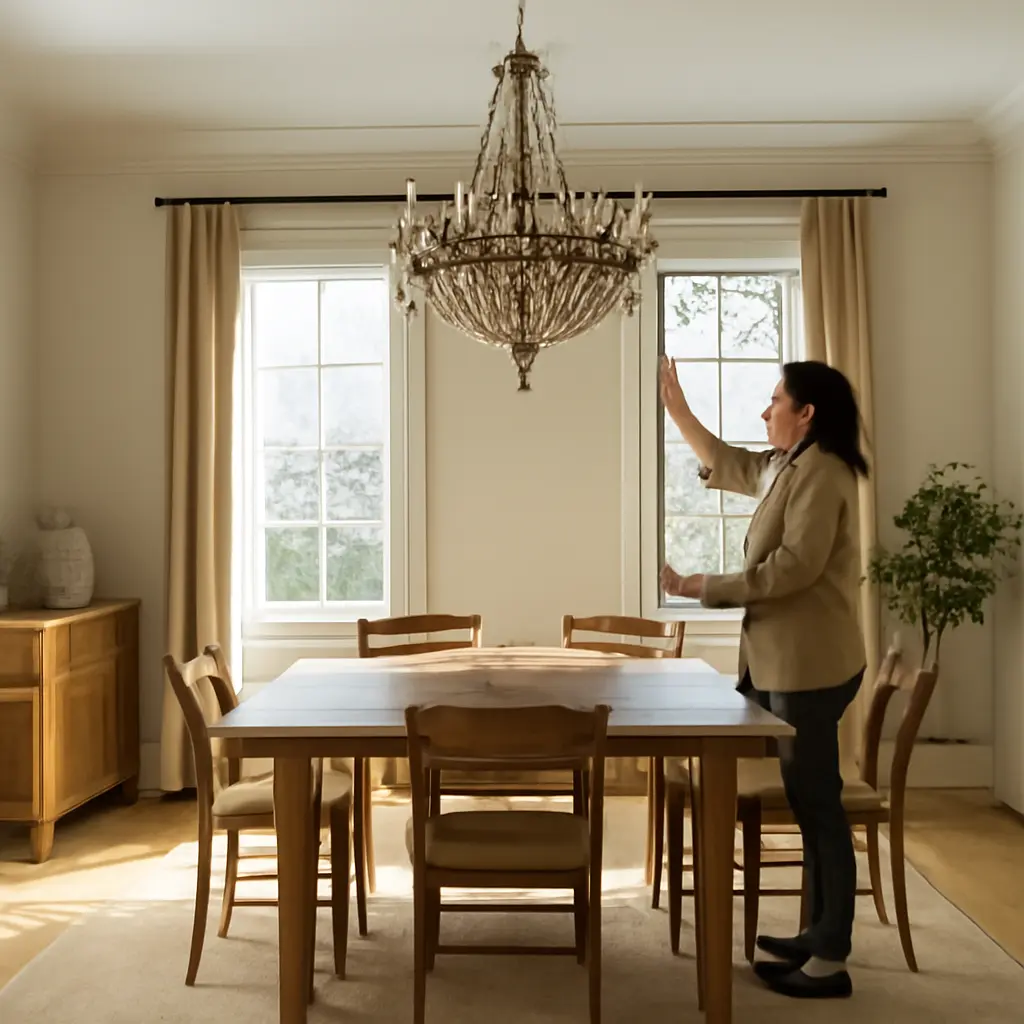
Antique lighting can bring history, craftsmanship, and a distinctive focal point to a dining room—but only when its scale, light, condition, and installation suit the space. The most common mistakes are choosing a fixture before measuring, assuming old wiring is safe, overlooking how light affects dining, and treating a historic object as ordinary décor. The U.S. Consumer Product Safety Commission warns that damaged or deteriorated electrical products can pose fire and shock hazards, while the National Fire Protection Association identifies electrical distribution and lighting equipment as one category involved in home fires. Careful assessment, appropriate restoration, and thoughtful placement help preserve the fixture and make the room comfortable to use.
Antique dining-room lighting: what the pairing means and why it matters
An antique dining-room light is a historic or vintage lighting fixture—such as a chandelier, pendant, or wall sconce—selected to illuminate a dining area. There is no single universal age threshold that makes a fixture “antique”; the term is often used broadly in interiors, so buyers should verify a piece’s date, materials, and provenance rather than rely on the label alone. The pairing works best when the fixture’s physical scale, electrical condition, light output, and design relate to the room’s size and use.
This is more than a style decision. A fixture hangs over people and, often, a table used for meals, conversation, and reading. Errors can produce glare, poor visibility, an awkwardly low obstruction, or electrical risk. The National Fire Protection Association’s home-fire reporting identifies electrical distribution and lighting equipment among equipment categories involved in reported home fires; that broad category does not mean antique fixtures are inherently unsafe, but it supports having questionable wiring and components assessed rather than assuming age equals safety.
Fixture types and their different jobs
Chandeliers and pendants usually provide the main pool of light above the dining table. Sconces can add softer light around the room, while a ceiling fixture may contribute general illumination. These types are related but not interchangeable: a dramatic chandelier may be a strong centerpiece yet leave corners dim, so it may need to work with other light sources.
Historic character is not proof of authenticity or safety
“Antique” describes an object’s perceived age or character, not its current electrical performance. A fixture may have original components, later repairs, or a mixture of old and new parts. Ask what has been replaced, whether the fixture has been inspected, and whether its mounting and wiring are suitable for the intended installation. A reputable specialist can help distinguish conservation from basic rewiring and cosmetic restoration.
Mistakes with antique lighting scale, placement, and sightlines
The first design mistake is treating a fixture as an isolated object. Interior-design guidance from the American Lighting Association emphasizes planning lighting for the room and its activities; in a dining room, that means considering the table, ceiling height, circulation, and other light sources together. Measure the room and table before buying, then confirm the fixture will fit both visually and physically.
Choosing a chandelier that is too large or too small
An oversized chandelier can crowd a small room or dominate a modest table, while an undersized one may look disconnected and fail to illuminate the dining surface. One commonly cited starting point is to add the room’s length and width in feet and use the result as an approximate chandelier diameter in inches. This is a design rule of thumb, not a safety standard: table dimensions, fixture shape, ceiling height, and visual weight can change the appropriate choice. Compare the fixture’s widest points with the table and leave adequate clearance around it.
Hanging the fixture too high or too low
A fixture that hangs too low can block views across the table or interfere with standing guests; one that hangs too high may lose its connection to the table and send more glare into the room. Designers often use roughly 30–36 inches above the tabletop as an initial planning range for a standard-height ceiling, then adjust for ceiling height, fixture size, and sightlines. Treat this as a starting point, not a universal code requirement. Mock up the proposed height with a temporary marker or measured drop before installation.
Ignoring table shape and room circulation
A long rectangular table may call for an elongated fixture or a balanced series of pendants, while a round table often pairs naturally with a centered chandelier. The fixture should align with the table rather than merely the room’s geometric center, especially when the table is offset. Check that doors, serving paths, and chairs remain unobstructed, and account for extensions if the table expands for gatherings.
Mistakes with light quality, bulbs, and controls
A historically attractive fixture can still create an uncomfortable dining environment. The key is to balance sufficient visibility with warmth, manageable glare, and the ability to adjust the room for different occasions. The U.S. Department of Energy explains that LED lighting is highly energy-efficient compared with traditional incandescent lighting, but a bulb’s suitability also depends on its color appearance, brightness, shape, and compatibility with the fixture and controls.
Using bulbs that are too bright, too cool, or visually mismatched
Bulbs that are excessively bright can make a meal feel harsh, particularly when exposed lamps are visible from seated positions. Very cool-looking light may also clash with warm wood, traditional finishes, and the atmosphere many people want at dinner. Check the fixture’s maximum wattage or LED-equivalent guidance, choose a color appearance that suits the room, and look at the bulb from the actual seated viewpoint. Where a fixture has multiple sockets, consistent bulb type and color help avoid patchy illumination.
Overlooking glare and exposed lamps
Glare occurs when a bright light source is uncomfortable to look at or distracts from the task. Clear bulbs and open shades can be especially troublesome when the light is directly in diners’ sightlines. Consider lamps with suitable frosting, shades, or diffusers, provided they are compatible with the fixture and do not trap heat beyond the manufacturer’s limits. Test the effect at table height instead of judging it only while standing.
Skipping dimming or using incompatible controls
A dimmer lets one fixture serve different needs, from brighter everyday meals to softer evening gatherings. However, not every LED bulb works with every dimmer, and a historic fixture may have electrical components that need evaluation before controls are changed. Check bulb and dimmer compatibility and have an electrician confirm that the circuit and fixture are appropriate. Layered lighting—such as a dimmable chandelier with sconces or other ambient sources—can provide more flexibility than relying on one bright overhead light.
Mistakes with antique fixture condition and electrical safety
A second major error is assuming that a fixture which looks sound is safe to energize. Age, storage conditions, previous repairs, heat, and mechanical stress can affect insulation, sockets, connections, and support hardware. The National Electrical Code is published by the National Fire Protection Association, but applicable requirements and adoption vary by jurisdiction; an electrician familiar with local rules should assess the installation.
Connecting old or unknown wiring without inspection
Cracked insulation, brittle wire, loose connections, improvised splices, and missing grounding provisions are reasons to pause and seek professional evaluation. Do not infer safety from a working bulb or a seller’s assurance. The U.S. Consumer Product Safety Commission advises consumers to stop using electrical products with damaged cords or other signs of deterioration. For a fixed antique fixture, have a qualified electrician or lighting-restoration specialist inspect its wiring and determine whether it can be safely repaired and installed.
Treating restoration as a purely cosmetic job
Cleaning, polishing, or repainting does not resolve electrical or structural defects. A sound restoration plan distinguishes conservation—retaining historically significant material—from safety work such as replacing unsafe wiring or repairing a failing socket. Ask the restorer to document what is original, what was replaced, what testing was performed, and which bulbs and controls are permitted. Avoid aggressive polishing or abrasive cleaning on finishes that may be original or intentionally aged.
Ignoring weight, mounting, and ceiling support
An antique chandelier may be heavier than a modern decorative fixture, and its chain, canopy, or ceiling attachment may have been altered over time. The ceiling box and support must be suitable for the fixture’s weight and installation. Do not rely on a decorative cover or an old hook as evidence of adequate support; have the mounting assessed and use an electrician for installation, particularly for heavy fixtures or uncertain ceilings.
Mistakes with style, preservation, and buying decisions
An antique light can enrich a contemporary room, but it should relate to the room rather than compete with every other focal point. The goal is not to make all finishes match; it is to create a considered relationship between the fixture, furniture, architecture, and materials while preserving the piece’s character.
Buying for appearance without checking provenance or condition
A persuasive style description is not a substitute for evidence. Ask the seller for dimensions, materials, known history, repairs, missing parts, and photographs of the canopy, sockets, and wiring. If the fixture is represented as a particular period or maker, request supporting documentation. Factor inspection, restoration, compatible bulbs, and professional installation into the total cost rather than comparing purchase prices alone.
Over-restoring or mismatching the room
Over-polishing aged metal, replacing distinctive glass, or adding a finish that obscures craftsmanship can reduce a fixture’s historic character. At the same time, a room filled with competing ornate objects may make the light feel out of place. Decide whether the fixture is intended as a focal point or part of a quieter, layered composition, and consult a conservator or specialist before making irreversible changes to a significant piece.
Forgetting maintenance after installation
Dust and grease can dull light, while loose components and aging materials deserve attention. Clean according to the finish and material, avoid wet cleaning near electrical parts, and follow the restorer’s care instructions. If the fixture flickers, smells hot, makes unusual sounds, or shows visible damage, turn it off and arrange professional inspection rather than continuing to use it.
A practical checklist before bringing antique lighting into the dining room
Use this sequence to reduce design and safety mistakes before purchase or installation:
- Measure the dining room, table, ceiling height, and available clearance.
- Confirm the fixture’s dimensions, weight, materials, and documented history.
- Ask about prior repairs and arrange an electrical and structural assessment.
- Plan bulb type, brightness, color appearance, glare control, and dimming compatibility.
- Check local electrical requirements and have a qualified professional install the fixture.
- Review cleaning and maintenance needs before committing to the purchase.
A simple comparison chart can help: list the fixture’s width and drop, table dimensions, estimated weight, wiring status, bulb requirements, and restoration cost. Seeing those details side by side makes it easier to compare candidates and spot a beautiful fixture that is impractical for the room.
Conclusion: choose antique dining-room lighting with care
The most consequential mistakes are choosing the wrong scale or hanging height, neglecting glare and light quality, and treating old wiring or mounting as safe without inspection. Good decisions connect the fixture’s historic character with the table, room proportions, layered lighting, and professional electrical assessment. Before buying, measure carefully, ask for condition and repair details, and consult a qualified electrician or restoration specialist. Those steps help protect both the dining room and the antique object while allowing its craftsmanship to be enjoyed.
Sources: National Fire Protection Association, Home Structure Fires, https://www.nfpa.org/education-and-research/research/nfpa-research/fire-statistical-reports/home-structure-fires; U.S. Consumer Product Safety Commission, Electrical Safety, https://www.cpsc.gov/Safety-Education/Safety-Guides/Home/Electrical-Safety; U.S. Department of Energy, LED Lighting, https://www.energy.gov/energysaver/led-lighting; American Lighting Association, Lighting Design, https://www.americanlightingassoc.com/; National Fire Protection Association, NFPA 70: National Electrical Code, https://www.nfpa.org/codes-and-standards/nfpa-70-standard-development/70.